What a talented and creative guy!! I love that!!!

Showing posts with label Art and Culture. Show all posts
Showing posts with label Art and Culture. Show all posts
Friday, October 7, 2011

Sunday, January 16, 2011
Pegasus
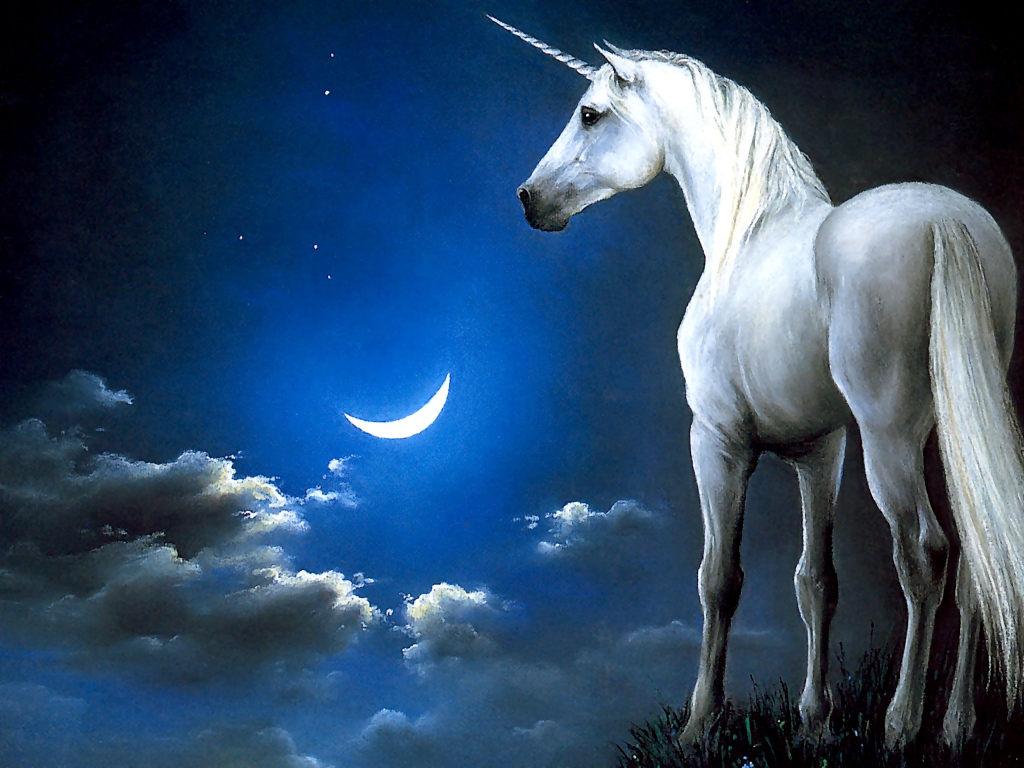


Pegasus is one of the best known fantastical creatures in Greek mythology. He is a winged divine horse, usually white in color. He was sired by Poseidon, in his role as horse-god, and foaled by the Gorgon Medusa. He was the brother of Chrysaor, born at a single birthing when his mother was decapitated by Perseus.
Greco-Roman poets write about his ascent to heaven after his birth and his obeisance to Zeus, king of the gods, who instructed him to bring lightning and thunder from Olympus. Friend of the Muses, Pegasus is the creator of Hippocrene, the fountain on Mt. Helicon. He was captured by the Greek hero Bellerophon near the fountain Peirene with the help of Athena and Poseidon.
Pegasus allows the hero to ride him to defeat a monster, the Chimera, before realizing many other exploits. His rider, however, falls off his back trying to reach Mount Olympus. Zeus transformed him into the constellation Pegasus and placed him in the sky. There are theories that ascribe the origin of Pegasus to Pihassassa, the ancient god of thunderstorms in Hittite mythology. Hypotheses have been proposed regarding its relationship with the Muses, the gods Athena, Poseidon, Zeus, Apollo, and the hero Perseus.
The symbolism of Pegasus varies with time. Symbol of wisdom and especially of fame from the Middle Ages until the Renaissance, he became one symbol of the poetry and the creator of sources in which the poets come to draw inspiration, particularly in the 19th century. Pegasus is the subject of a very rich iconography, especially through the ancient Greek pottery and paintings and sculptures of the Renaissance. Personification of the water, solar myth, or shaman mount, Carl Jung and his followers have seen in Pegasus a profound symbolic esoteric in relation to the spiritual energy that allows to access to the realm of the gods on Mount Olympus.
In the 20th and 21st century, he appeared in movies, in fantasy, in video games and in role play, where by extension, the term Pegasus is often used to refer to any winged horse.
Source: Wikipedia
Tuesday, November 30, 2010
Street Art by Alexandre Farto aka Vhils


The 24 years old portuguese graffiti artist Alexandre Farto (Vhils) started with a traditional graffiti “bombing” and later he passed on to the street art and has been doing this for the past 3 years. The whole world is considered to be his home town and the point of inspiration. The old town of Lisbon and his room are his most favorite places, where Alexandre loves to work or see the art of the others. At nights he explores the process of burning, and if got some more time he would finish one trick, visit some train watching spots and sleep for a long time…
Vhils oversteped the limits of graffiti. So now when going to a future work-of-art place he‘s taking not only spray bottles of paints, but also a perforator, a hammer and some scratchers. After spraying the drawing he “deepens” it taking off the plaster and paper in some spots. That‘s why his stunning works-of-art are considered to be the 2-D sculptures. His art is poetic, complicated, usually concentrated to essential things which we have abandoned for our short-time wishes. In some way they are saying that it is possible to come back and feel happiness again...
Vhils is creating on walls, wood, metal, paper, billboards, prints and art instalations...
Visit his site at: http://alexandrefarto.com/
Wednesday, November 24, 2010
Johannes Vermeer


Johannes Vermeer, born in Delft in 1632 and buried in the same city on 1675, was one of the great Dutch masters of painting, though only about 30 paintings by him are known. He specialized in exquisite, domestic interior scenes of middle class life. Vermeer was a moderately successful provincial genre painter in his lifetime. He seems never to have been particularly wealthy, leaving his wife and children in debt at his death, perhaps because he produced relatively few paintings. Vermeer worked slowly and with great care, using bright colours and sometimes expensive pigments, with a preference for cornflower blue and yellow. He is particularly renowned for his masterly treatment and use of light in his work.
Source: Wikipedia
Monday, November 8, 2010
"Fall of Giants" by Ken Follett

Fall of Giants is a magnificent new historical epic. The first novel in the Century trilogy, it follows the fates of five interrelated families – American, German, Russian, English and Welsh – as they move through the world-shaking dramas of the First World War, the Russian Revolution, and the struggle for women’s suffrage.
These families find their lives inextricably entangled as, in a saga of unfolding drama and intriguing complexity, Fall of Giants moves seamlessly from Washington to St. Petersburg, from the dirt and danger of a coal mine to the glittering chandeliers of a palace, from the corridors of power to the bedrooms of the mighty.
As always with Ken, the historical background is brilliantly researched and rendered, the action fast-moving, the characters rich in nuance and emotion. It is destined to be a new classic.
Wednesday, November 3, 2010
Venus de Milo

Aphrodite of Milos, better known as the Venus de Milo, is an ancient Greek statue and one of the most famous works of ancient Greek sculpture. Created at some time between 130 and 100 BC, it is believed to depict Aphrodite (Venus to the Romans) the Greek goddess of love and beauty. It is a marble sculpture, slightly larger than life size at 203 cm (6 ft 8 in) high. Its arms and original plinth have been lost. From an inscription that was on its plinth, it is thought to be the work of Alexandros of Antioch; it was earlier mistakenly attributed to the master sculptor Praxiteles. It is at present on display at the Louvre Museum in Paris.
(in Wikipedia)
Thursday, October 28, 2010
The art of Constantin Brancusi

 |
| "The Kiss" |
 |
| "Sleeping Muse" |
 |
| "The Newborn" |
 |
| "Sleeping Muse", bronze |
 |
| "Mademoiselle Pogany" Triplet |
The Romanian sculptor Constantin Brancusi (1876-1957) was a central figure of the modern movement and a pioneer of abstraction. His sculpture is noted for its visual elegance and sensitive use of materials, combining the directness of peasant carving with the sophistication of the Parisian avant-garde. After attending the Bucharest School of Fine Arts and learning of the sculpture of August Rodin, Brancusi traveled to Paris in 1904. Brancusi created his first major work, The Kiss, in 1908. From this time his sculpture became increasingly abstract, moving from the disembodied head of Sleeping Muse to the virtually featureless Beginning of the World and from the formal figure of the legendary bird Maiastra to numerous versions of the ethereal Bird in Space.
Brancusi's sculpture gained international notoriety at the 1913 Armory Show in New York, a city that he visited four times and where his work frequently would be exhibited. In his Paris studio at 8 Impasse Ronsin Brancusi devoted great attention to the arrangement of his sculptures, documenting individual works and their installation in an important body of photographs. (The Noguchi Museum)
Monday, October 18, 2010
The Wave in Vejle


Danish Henning Larsen Architects has received the LEAF Award, category Residential Building of the Year 2010 in the sub-category "Multiple Occupancy" for their project "The Wave in Vejle".
"The Wave in Vejle" is a new sculptural housing landmark of Vejle, Denmark. With an ideal location overlooking the promenade and the bay the characteristic building both respects and challenges the potential of the area. During the day the white waves are reflected in the sea and at night the characteristic profile looks like illuminated multi-coloured mountains. The building has 140 attractive apartments many with two storey house plans, all with views.
The wave is inspired by the characteristics of the area: the fjord, the bridge, the town and the hills. The clear and easily recognisable signature of the building connects the residential area with the sea, the landscape and the town.
The LEAF Awards are presented by the association of european architects, leading european architectsforum, which has recognised innovative architectural projects with awards since 2002.
from: Designboom
Sunday, October 17, 2010
The Barber of Seville

Thursday, October 14, 2010
National Wine Holiday 2010 in Chisinau - Moldova


About 40 wine-making, wine-growing and food companies, as well as over 100 Moldovan popular craftsmen participated in the National Wine Holiday - 2010, inaugurated at the Moldexpo International Exhibition Centre, in Chisinau, the capital of the country. It was the ninth issue of the National Wine Holiday, which is an important event both for tourists and for the local economic agents. The ninth issue of the National Wine Holiday, held on 9 and 10 October included presentations and wine tasting, contests and nomination of the best economic agents in the field.
Sunday, October 10, 2010
The Magic of Cirque Du Soleil


Cirque du Soleil is a Canadian entertainment company, self-described as a "dramatic” mix of circus art and street entertainment." Based in Montreal, Quebec, Canada and located in the inner-city area of Saint-Michel, it was founded in1984 by two former street performers. Its theatrical, character-driven approach and the absence of performing animals helped define Cirque du Soleil as the contemporary circus (“nouveau cirque”) that it remains today. Cirque's creations have been awarded numerous prizes and distinctions all over the world.
Visit its official website : Cirque Du Soleil
Subscribe to:
Posts (Atom)